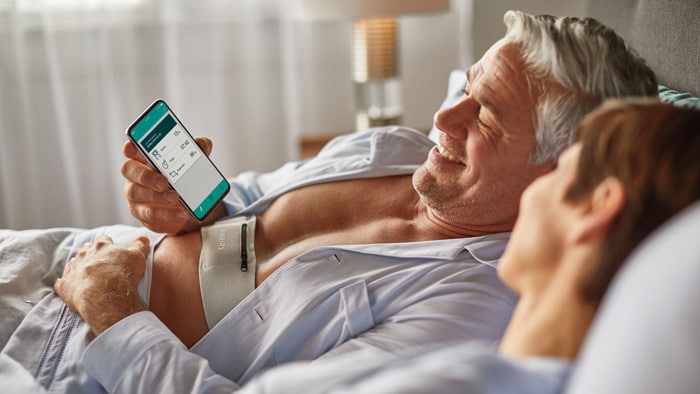
What is positional sleep apnea?
Position-dependent Sleep Apnea
In classic sleep apnea, the airways are repeatedly blocked during sleep, leading to an interruption of breathing. Position-dependent sleep apnea is a special form of this. Here, the airways are predominantly blocked when lying on the back.
Sleep apnea affects sleep quality and can significantly impact performance and overall health. If you have sleep apnea and apnea events occur twice as often in the supine position as in the lateral position, your sleep apnea is likely position-dependent. Sleeping on your side can significantly reduce your symptoms.
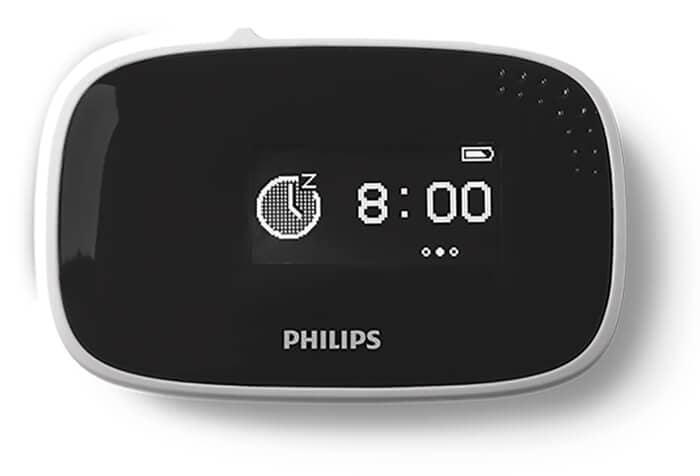
Consult your doctor to find out if you have been diagnosed with position-dependent OSA.
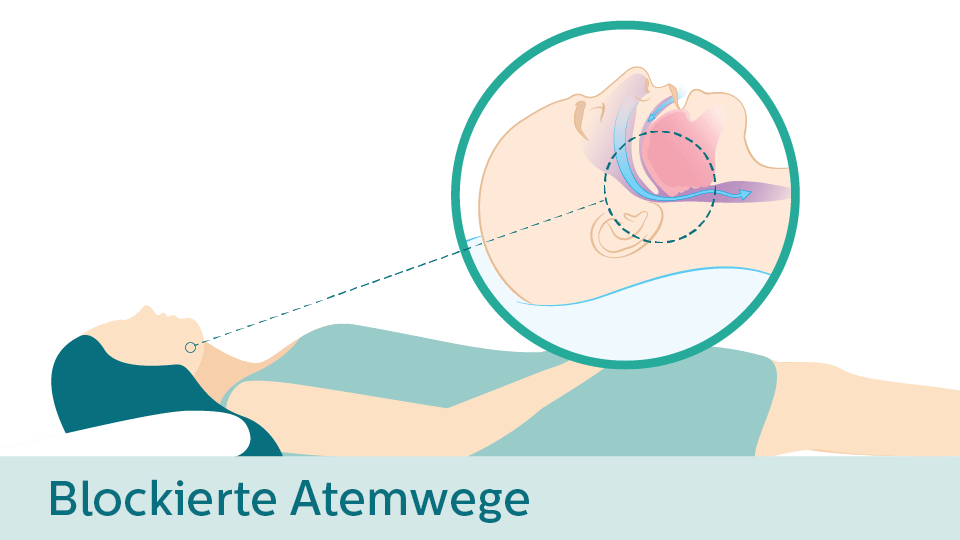
When sleeping on your back, your airways are blocked, which can lead to an interruption in breathing.
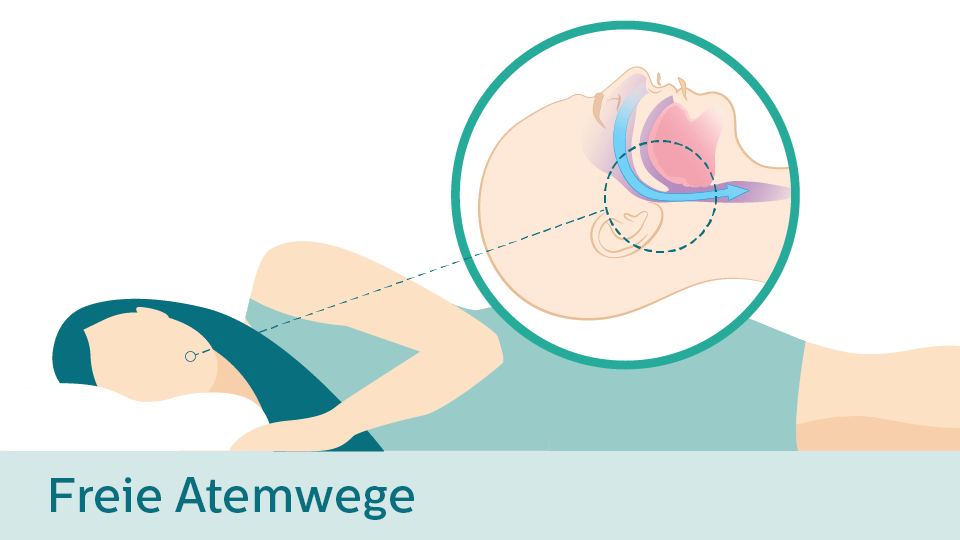
When sleeping on your side, your airways are clear, making breathing easier.
We are on your side and enable mask-free sleep apnea therapy
If you suffer from position-dependent sleep apnea , a classic CPAP therapy can help you. However, you must wear a mask every night. A mask-free alternative is to avoid the supine position. NightBalance was developed for this purpose.
NightBalance is an easy-to-use and apply device that you can comfortably wear at night.It continuously monitors your sleeping position and prompts you to lie on your side. The intensity of the vibrations automatically adjusts to you.
Philips
NightBalance
Mask-free therapy specifically for positional sleep apnea

The advantages of NightBalance
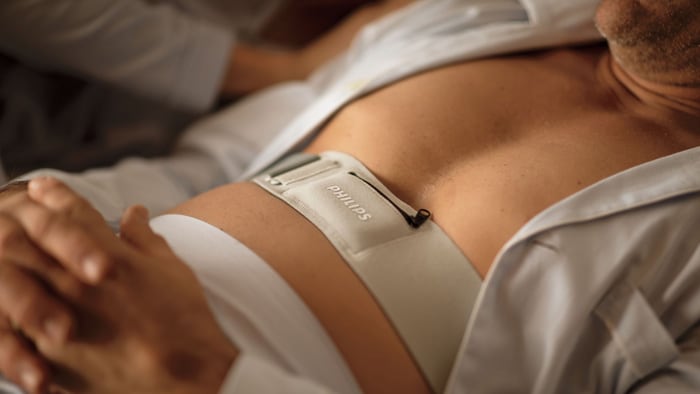
Comfortable to wear
The compact device is worn on the chest using a soft, adjustable strap.According to customer reviews, it is more comfortable to wear than a CPAP device. (1)
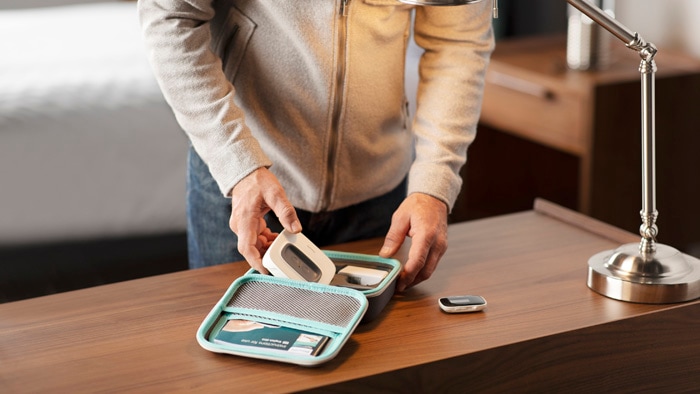
For home and on the go
No mask, no surgery: The discreet, quiet sensor is worn in a chest strap. You can take the device anywhere thanks to the practical travel case.
Compatible with mobile devices
The device is compatible with mobile devices and can be used with a user-friendly app. If you wish, your doctor will also receive your data and can thus accompany you in your therapy progress.